

Motorized Blinds Installation
Motorized blinds installation for Palm Beach, Jupiter, Palm Beach Gardens, and West Palm Beach, designed for cleaner light control, quieter operation, smart-home convenience, privacy, and a more polished finished look throughout the rooms you use every day.

Motorized blinds should solve daily light control, not create a complicated project
Most people looking for motorized blinds installation are not just shopping for a prettier window covering. They are trying to fix something specific in the way a room feels and functions. Maybe afternoon glare makes a television hard to see. Maybe a wall of glass looks great but is difficult to manage every day. Maybe the primary bedroom needs blackout performance without cords, or maybe the homeowner wants shades to move with the rest of a smart home instead of operating as a separate system.
Motorized blinds work best when they are planned as part of the room, not treated as a stand-alone window covering. The right system can soften harsh daylight, reduce glare, improve privacy, simplify tall or hard-to-reach windows, and create a cleaner finished look without adding cords or daily manual adjustments. In a smart-home environment, shades can also work with remotes, keypads, mobile apps, voice control, and scenes for lighting, audio, video, and climate, so the room responds more naturally throughout the day.
A good installation also makes the decision process clearer. Homeowners often need help choosing between battery-powered and hardwired shades, selecting blackout, room-darkening, solar, or light-filtering fabrics, planning charging access, confirming window depth, matching fascia or trim details, and deciding how multiple windows should move together. PBCAV plans those details room by room so the finished result feels quiet, simple, and intentional instead of awkwardly added after the fact.
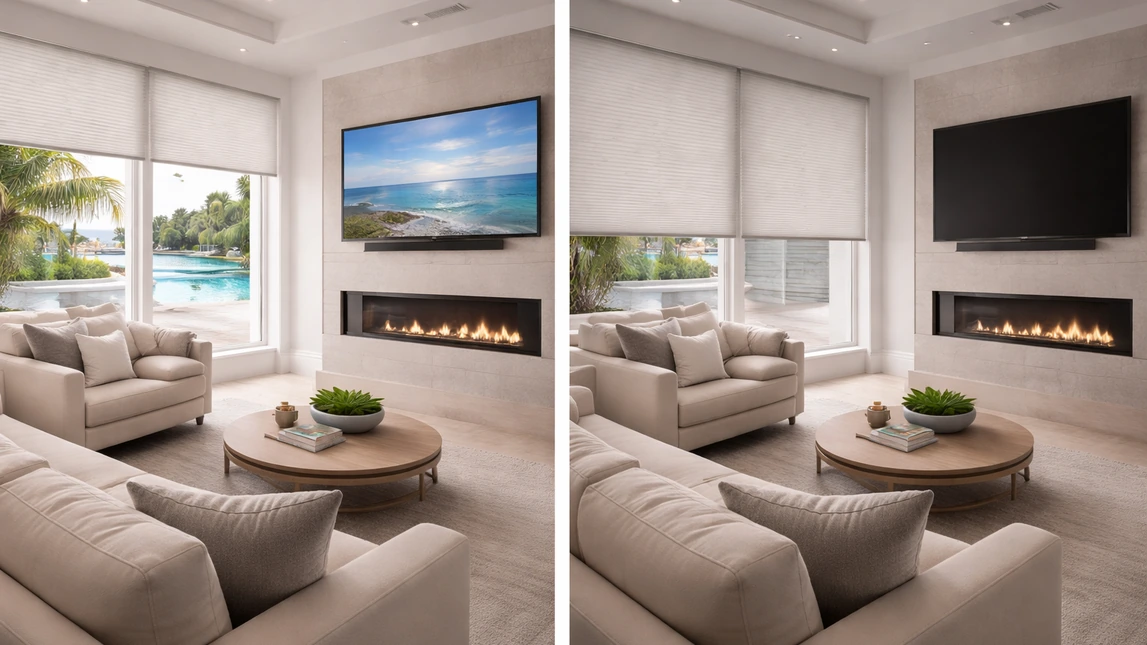
Designed around comfort, privacy, and daily convenience
Motorized blinds make the biggest difference in rooms where daylight, privacy, and usability all matter at the same time. The right system helps reduce glare on televisions and laptops, softens harsh sun, improves privacy without messy cords, and makes it easy to manage large or difficult windows with a remote, app, keypad, or voice control. Instead of walking from room to room adjusting shades by hand, homeowners can create a cleaner routine that feels effortless and more consistent every day.
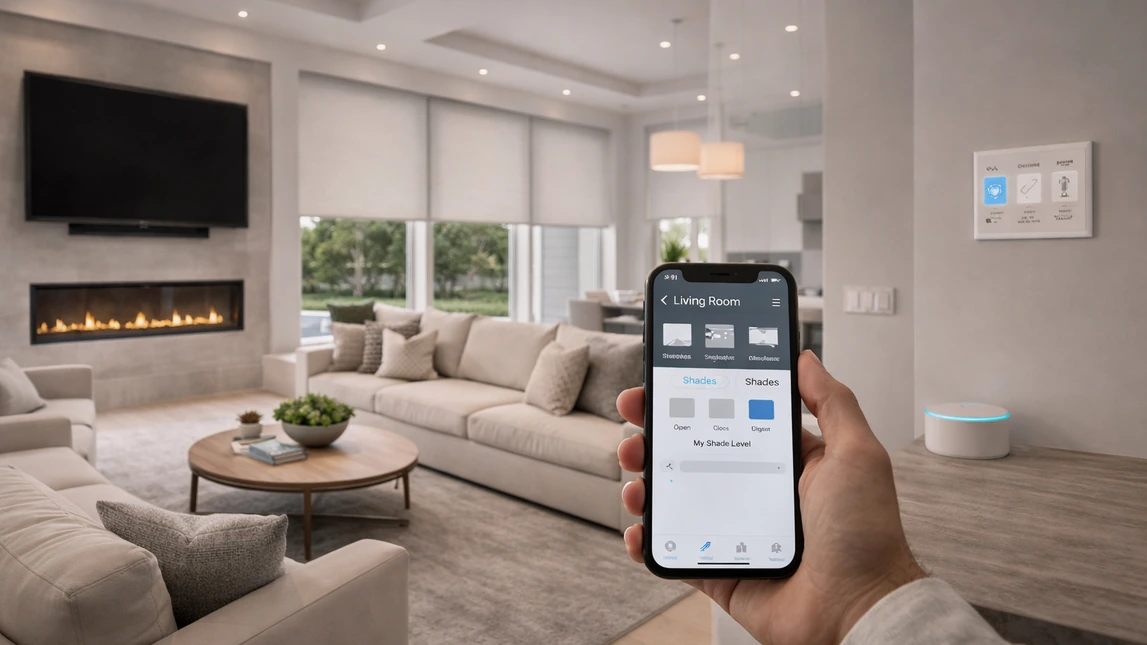
A better fit for smart-home and AV environments
For PBCAV, motorized blinds are not an isolated product category. They are part of how a room performs. Shade scenes can support media viewing, daytime privacy, morning wake-up routines, and evening entertaining. Integrated control also gives homeowners a simpler way to manage the space, especially when shades work alongside lighting, climate settings, and entertainment systems instead of requiring a separate process.
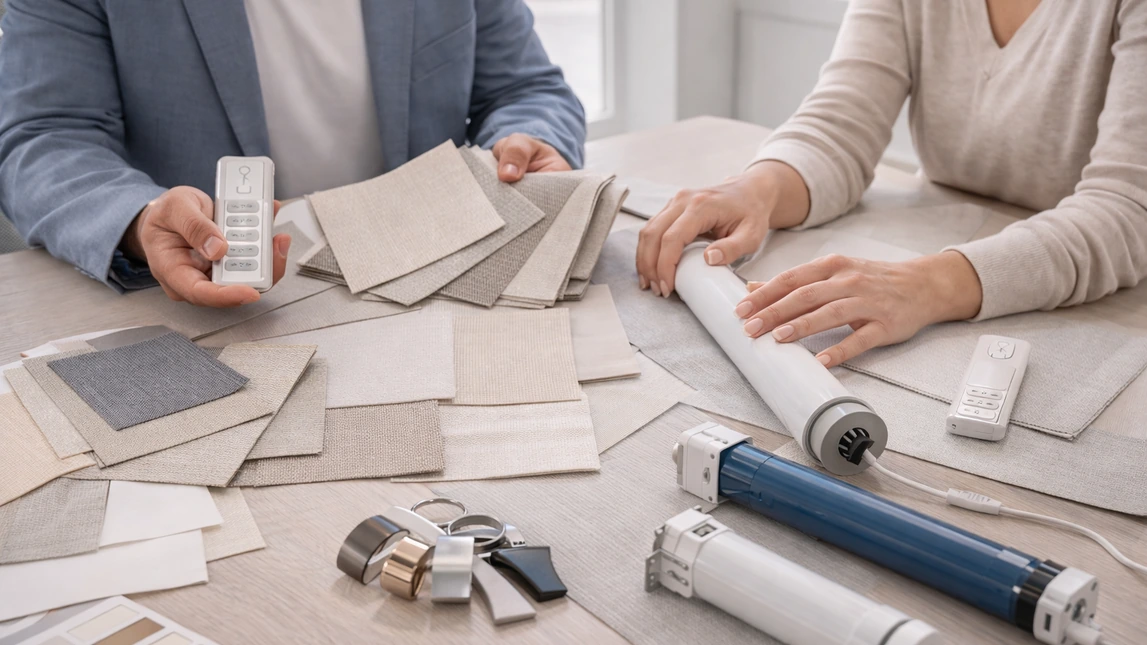
Planned around window type, fabric, power, and finish details
Motorized blinds installation works best when the planning happens before the order is placed. Window width, mounting depth, fabric openness, blackout needs, privacy expectations, fascia style, battery access, charging approach, and hardwire opportunities all affect the final result. A polished installation is about more than mounting a shade. It is about selecting a system that belongs in the room visually and functionally so the finished product looks clean and performs the way the homeowner expects.
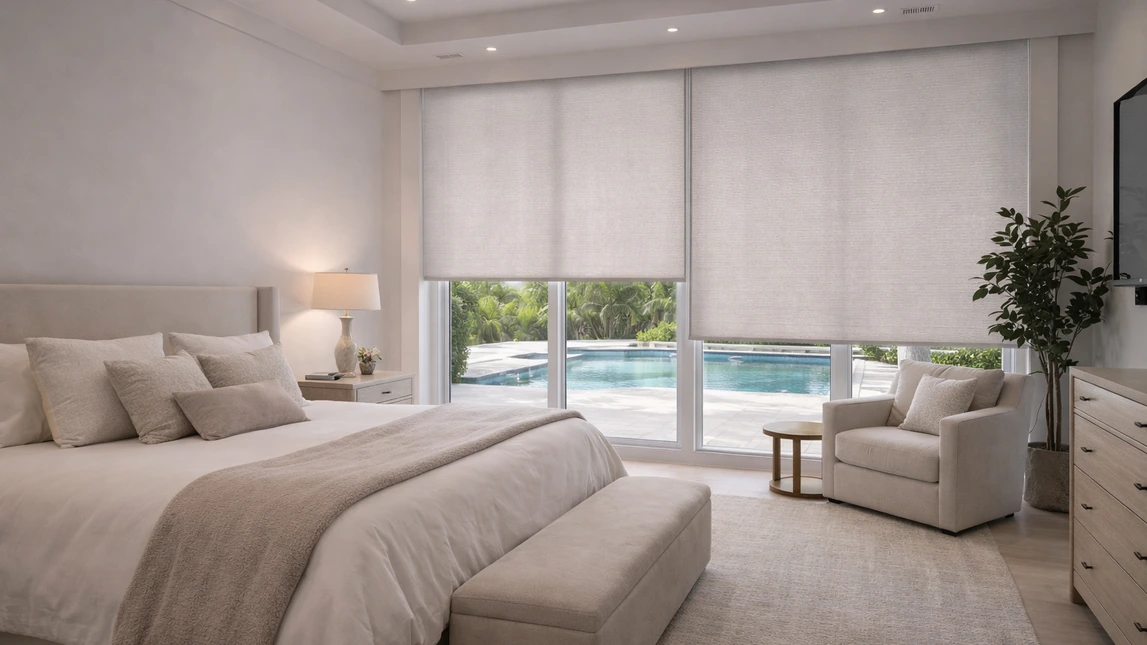
Built for rooms people actually use
The best recommendations usually come from how a room is lived in. Bedrooms often need privacy and blackout control. Great rooms need glare reduction without making the space feel shut down. Offices need balanced daylight and screen visibility. Media rooms and casual entertainment spaces need smoother transitions between open daylight and viewing mode. Those real room-by-room use cases make the service easier to understand than a generic list of shade products.
Where motorized blinds add the most value
The strongest installations match the shade system to the way each room handles light, privacy, comfort, and day-to-day routines.
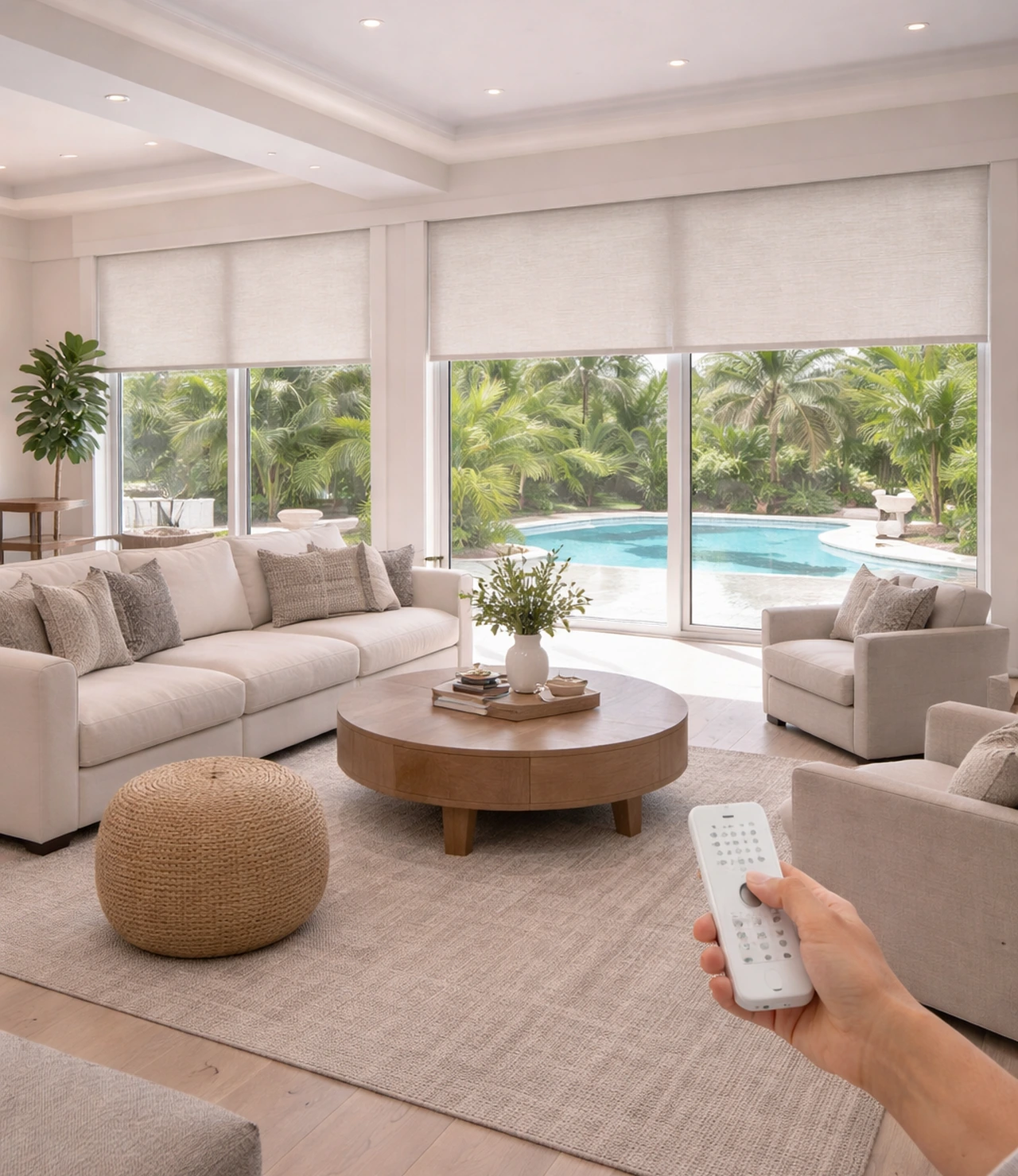
Living rooms, great rooms, and open-concept spaces
Large shared spaces often need a more balanced approach than people expect. The goal is usually not total blackout. It is better daytime control that still feels open and inviting:
- Reduce harsh glare on televisions, tablets, and laptops without making the room feel closed off.
- Manage wide glass openings and multiple adjacent windows with cleaner, coordinated movement.
- Use light-filtering or solar fabrics where preserving daylight is just as important as controlling it.
- Create simple scenes for entertaining, relaxing, or watching a game in the afternoon.
- Keep cords, chains, and manual adjustments out of sight for a more finished appearance.
Bedrooms and privacy-focused rooms
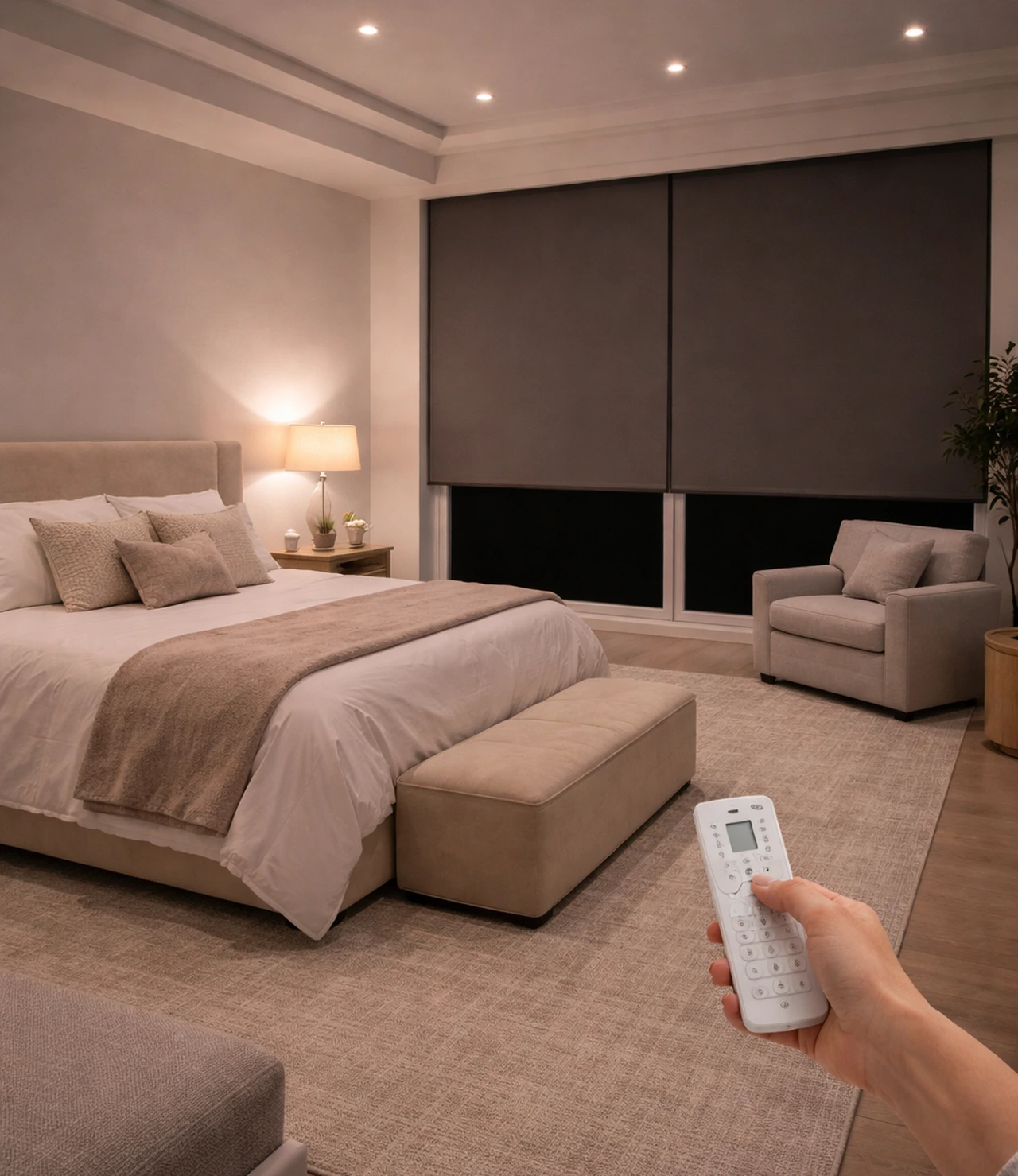
Bedrooms and personal spaces usually require more deliberate decisions about privacy and darkness. The product has to do more than move automatically:
- Pair blackout performance with smooth operation for a quieter morning and evening routine.
- Use scheduling to support wake-up and bedtime scenes instead of relying on daily manual adjustment.
- Choose fabrics and side-channel approaches carefully when stronger light control is the priority.
- Remove exposed cords for a cleaner look and a safer environment where children may be present.
- Coordinate multiple windows in the same room so the final look feels intentional instead of pieced together.
Home offices and daytime-use spaces
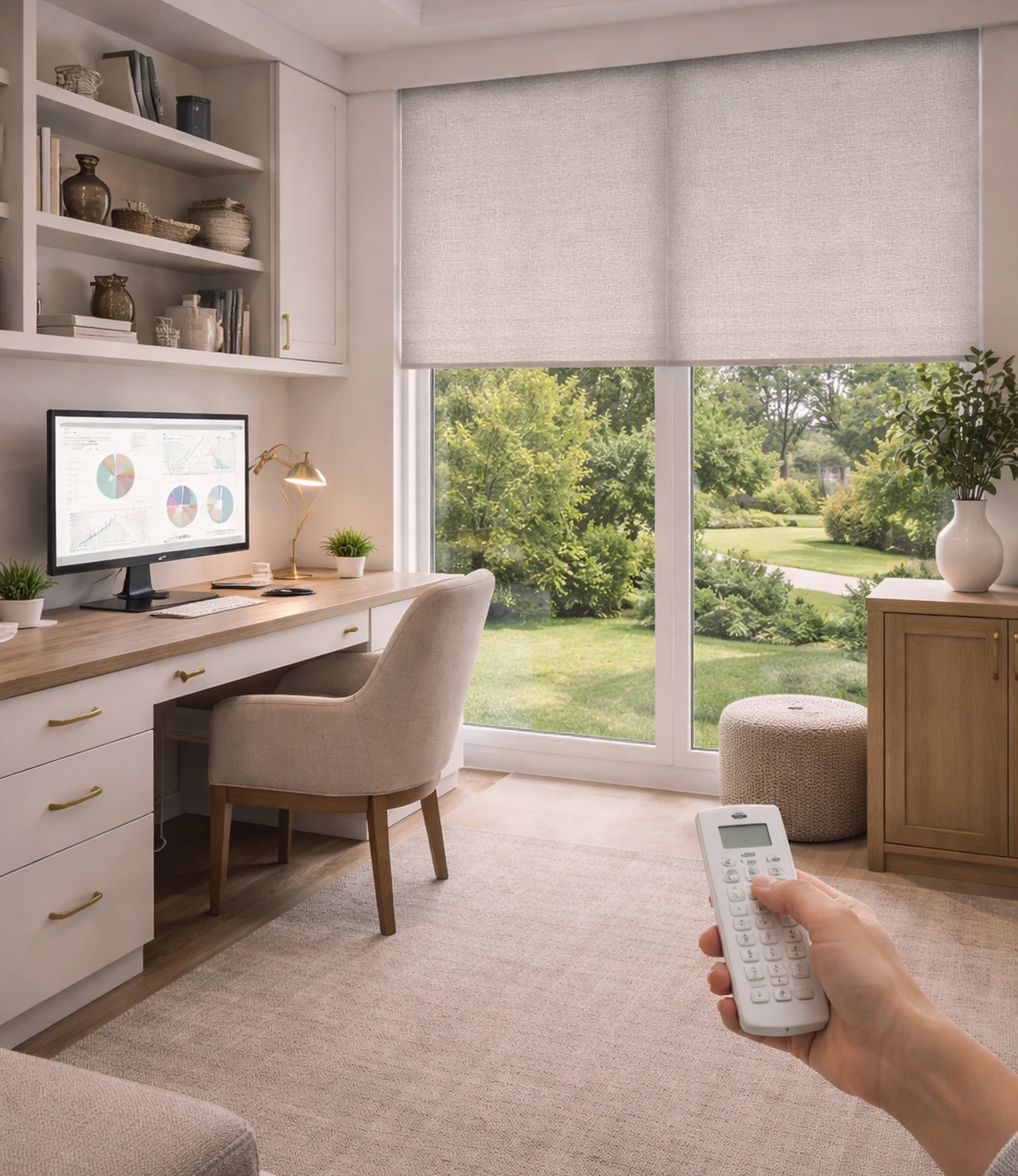
Office environments and multipurpose rooms benefit from controlled daylight, not all-or-nothing shade use. The system should support productivity and comfort throughout the day:
- Reduce glare on computer screens while keeping useful daylight in the room.
- Use automation to follow the strongest sun exposure during predictable hours.
- Select openness levels that preserve the exterior view where that matters.
- Keep controls simple enough that the shades get used consistently rather than ignored.
- Support cleaner backgrounds and a more polished environment for calls and meetings.
Media-focused rooms and integrated smart-home scenes
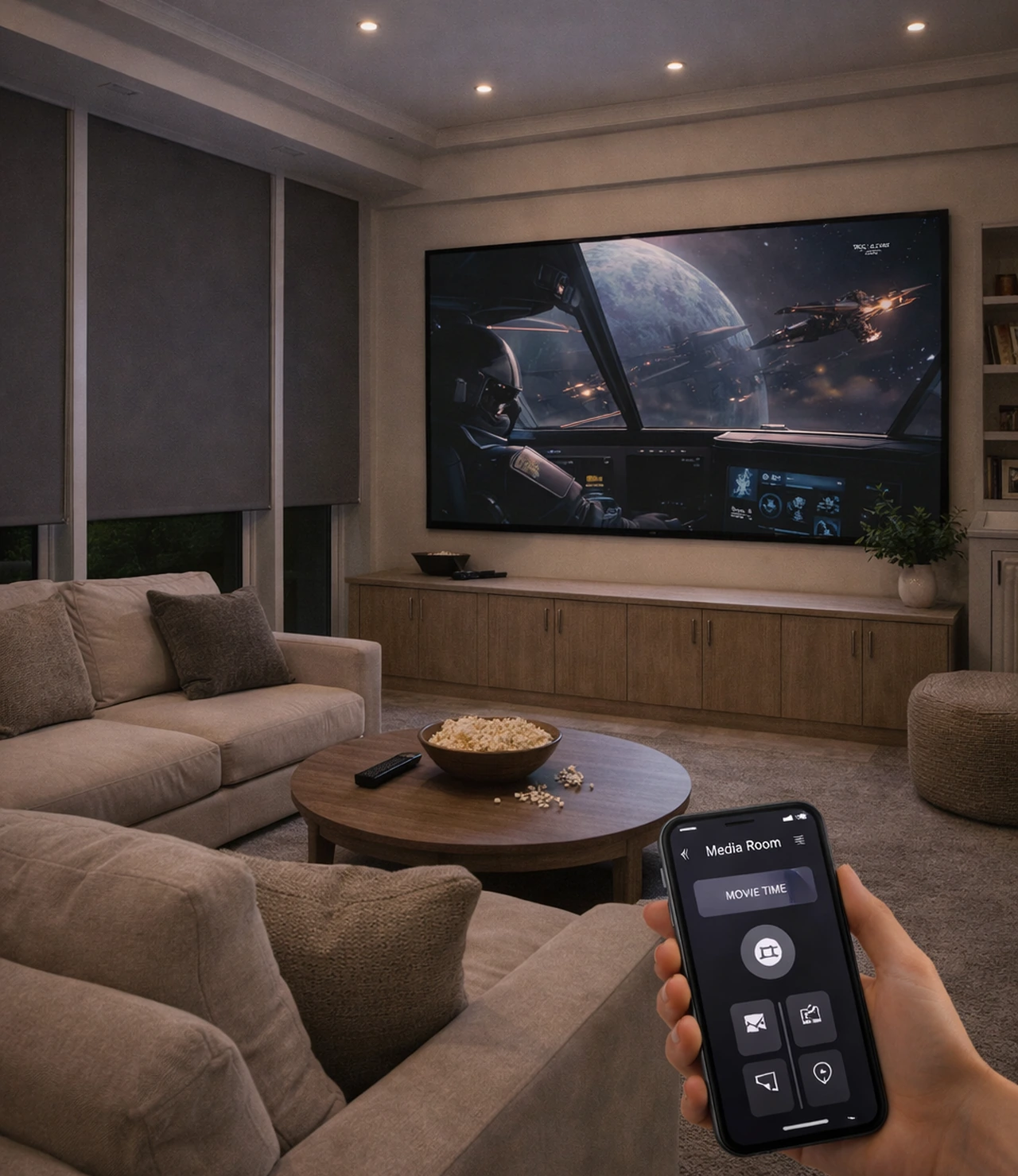
Some of the strongest opportunities come from rooms that already depend on coordinated control. This is where PBCAV can connect window treatments to a bigger user experience:
- Lower shades as part of a viewing or listening scene instead of treating them as a separate step.
- Coordinate shade behavior with lighting levels, display use, and time-of-day routines.
- Reduce reflections on displays and improve daytime viewing conditions.
- Use remotes, keypads, apps, or voice control that already fit the home.
- Create a room that feels intentional, simple, and easier to enjoy on a daily basis.
Simple control matters as much as the fabric itself
The best motorized blinds are the ones people actually use. That usually means intuitive control from a remote, app, keypad, schedule, or voice assistant, plus clean integration with broader smart-home routines. When the control method feels natural, homeowners use their shades more consistently and get more value from the installation.
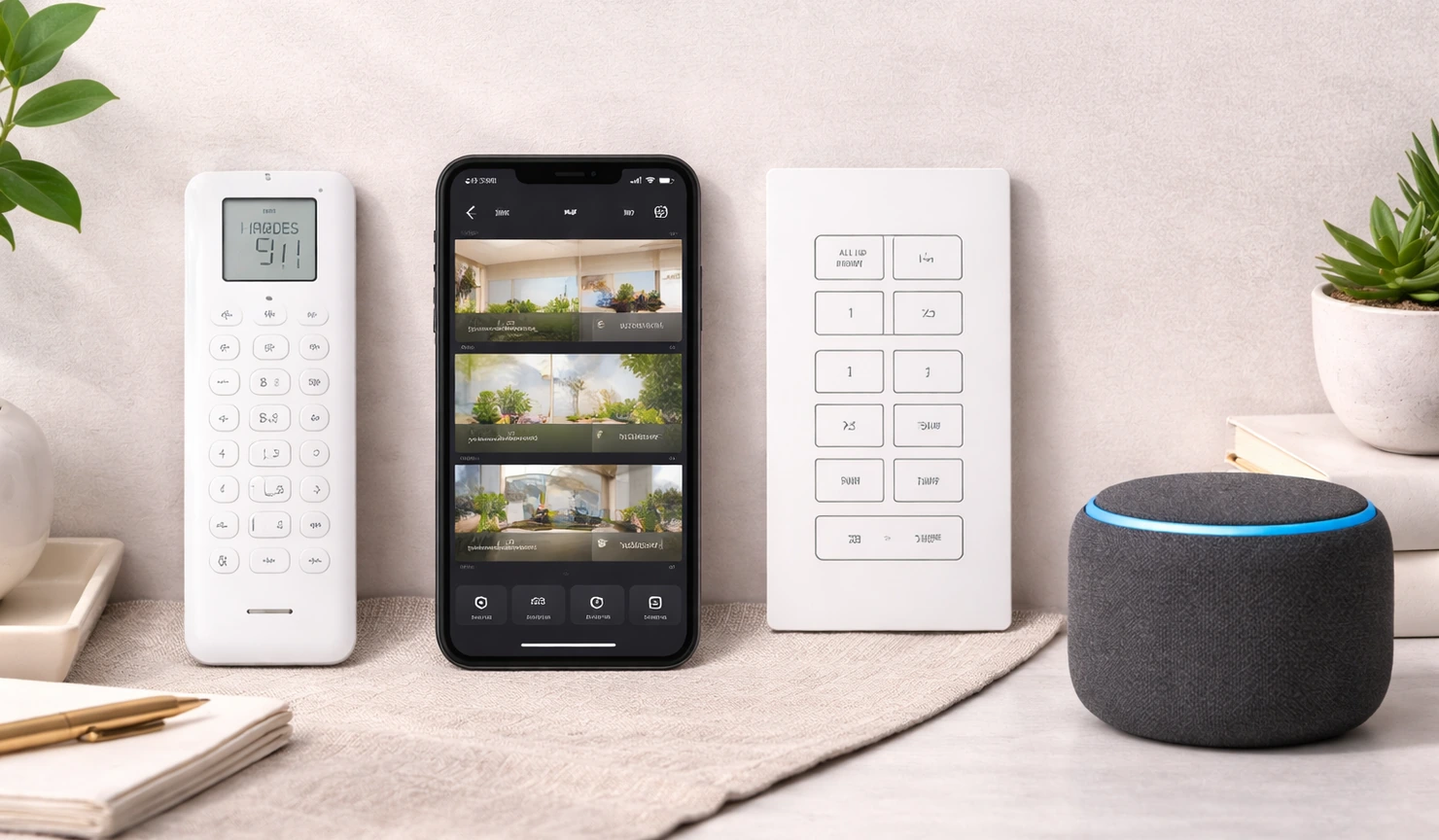
Motorized Blinds Installation Built Around Daily Living

Motorized Shades Planned Around Daily Living
Motorized blinds work best when they are planned around the way a room is actually used. Some homeowners want better light control in bright living areas. Others want privacy in the evening, blackout performance in bedrooms, or easier operation for tall and hard-to-reach windows. PBCAV approaches installation with those real use cases in mind, helping homeowners choose the right shade style, control method, and automation setup so the finished system feels smooth, quiet, reliable, and easy to live with every day.
What homeowners usually need help deciding
- Battery-powered versus hardwired shades
- Blackout, room-darkening, solar, or light-filtering fabrics
- Roller shades, cellular shades, sheer shades, or motorized blinds
- Single-room control or whole-home scheduling
- Remote control, keypad, app, voice, or integrated automation
- Mounting details, fascia choices, and finished appearance
- How to handle large windows, grouped windows, or tall openings
Why professional installation matters
- Cleaner fit and alignment across multiple windows
- Better planning for charging access or prewire opportunities
- Stronger product selection based on room function
- More reliable integration with control platforms and scenes
- Fewer compromises in privacy, glare control, and daylight balance
- A more polished final appearance around trim and architectural details
- Programming that makes the system feel intuitive from day one
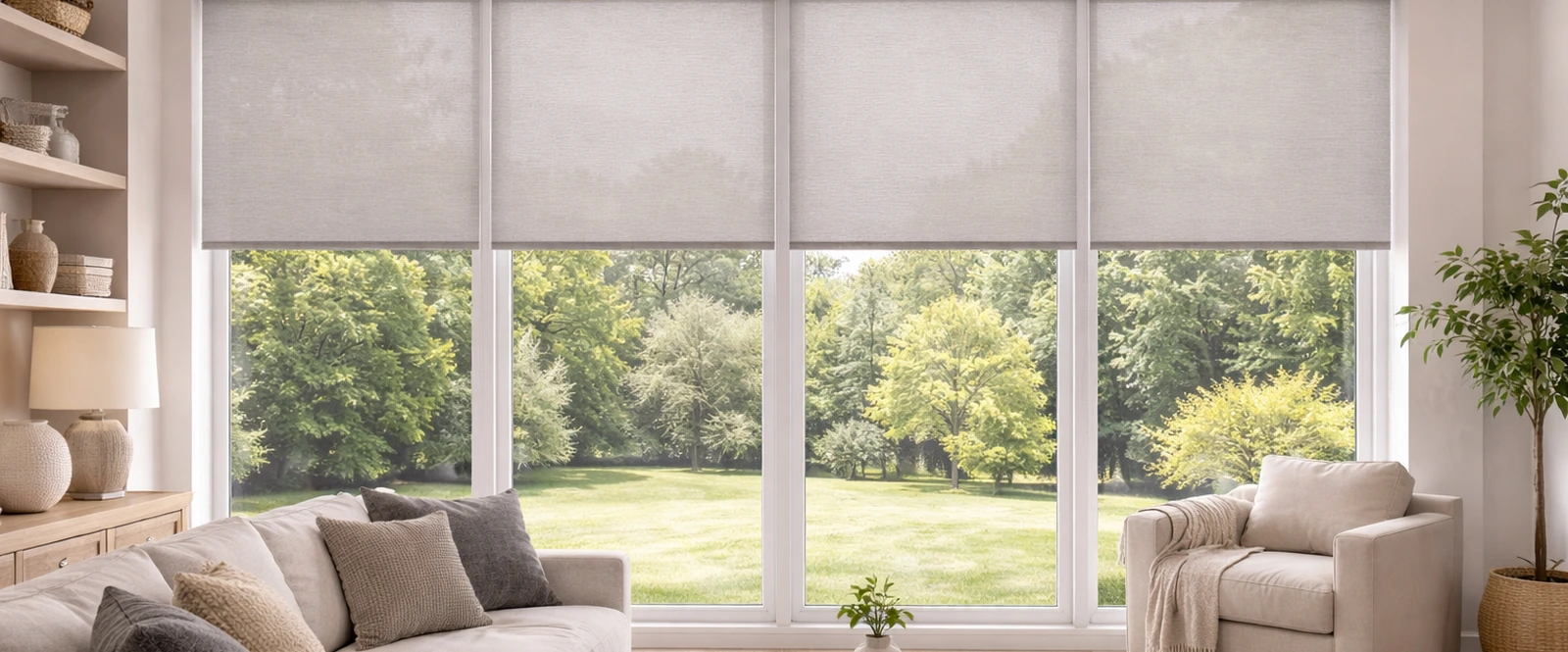

Cordless control, cleaner design, and easier routines
A good motorized shade system should disappear into the way the room works. The right installation makes privacy, glare control, and everyday comfort feel smoother without adding visual clutter or complicated steps.
What to expect from a well-planned installation
The best projects combine the right shade type, the right control method, and a room-by-room plan that feels natural once everything is in place.
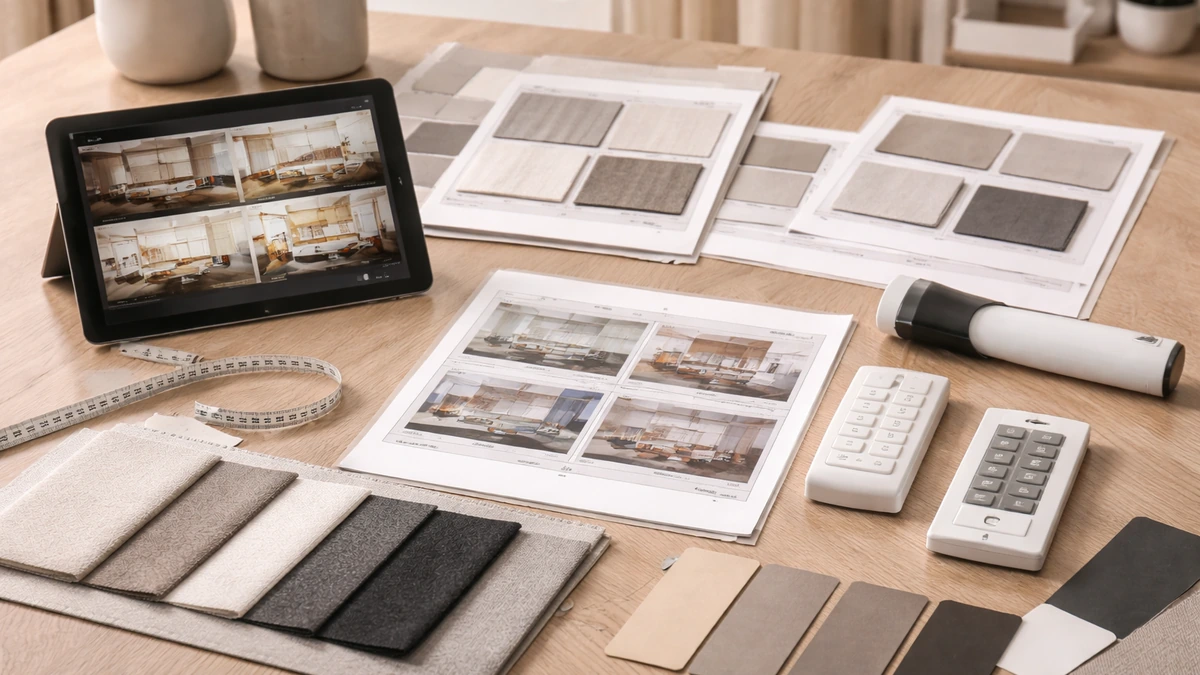
Motorized Shade Planning
Request a consultation for motorized blinds, shades, and integrated room control
Whether you are planning one room or coordinating window treatments with a larger smart-home project, PBCAV can help you choose the right products, control method, and installation approach for a cleaner final result.